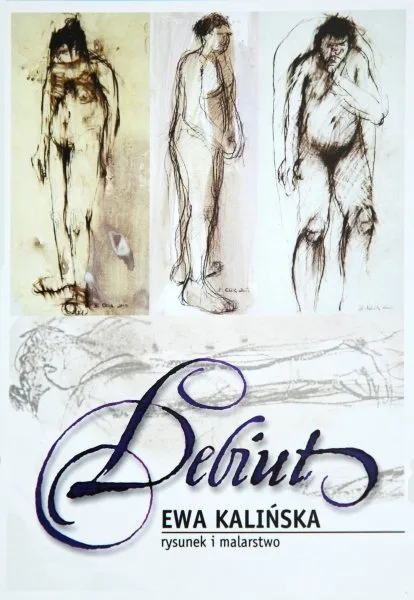
Debut
- Venue
- Alternatywa Gallery, Gdańsk, Poland
- Dates
- December 2005
Ewa Kalińska has chosen still life as the primary theme of her work. Although still life paintings make up the majority of her artistic portfolio, other themes also emerge in her creations. She places drawing on equal footing with painting, yet her drawings are not merely preparatory sketches—although such works occasionally appear.
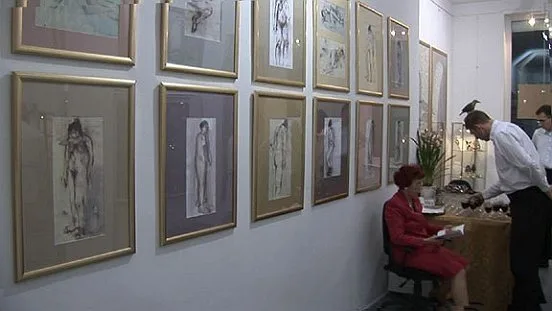
For Kalińska, drawing has become a vital means of artistic expression, and she treats it with the utmost seriousness. Her drawings are autonomous, independent, strong, and decisive. All of them revolve around a single subject—the human figure. Nature serves as the starting point, which the artist seeks to transform through her vision.
I have been following her artistic journey for many years and recall the works she created while studying at the European Academy of Art in Warsaw. Her professors included distinguished artists: Prof. Barbara Szubińska, Franciszek Starowieyski, and Jerzy Duda-Gracz. Another crucial stage in her artistic education was the Academy of Multimedia in Gdańsk, where she deepened her knowledge of fine arts in her hometown. During her time in Prof. Wojciech Mokwiński’s studio, she developed an interest in digital graphics and interdisciplinary artistic exploration. It is worth noting that she graduated from this institution with honors.
There are artists who narrow their field of activity to construct their own truth about the world, while others spend their lives exploring different directions in search of their artistic identity. There is no single rule. Kalińska is an advocate of the first approach—she consistently returns to still life and the human figure, striving to present them in new, refined ways each time.
Although today marks her painting debut, Ewa Kalińska has been actively involved in the artistic world for many years. The exhibition at Alternatywa Gallery offers a wider audience the opportunity to view the paintings and drawings of this young and talented artist. Personally, I look forward to her future artistic presentations with great anticipation.
Marek Model, 2005
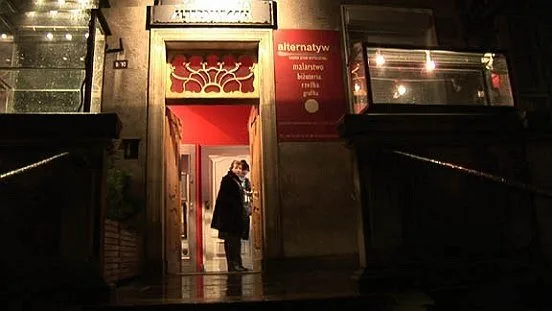
Alternatywa is a small gallery located on Mariacka Street. It breathes new life into this historic street, known for its old townhouses and amber shops, by showcasing contemporary art within its walls.
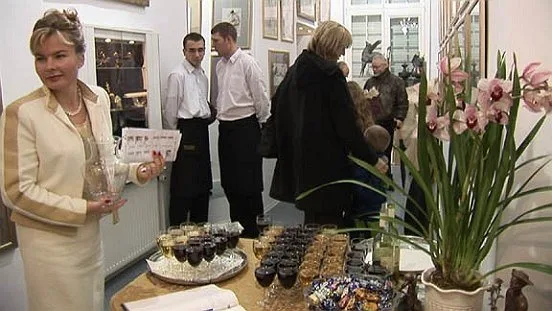
On Wednesday, December 7, this gallery hosted the exhibition “Debut”—a fitting title for the first solo show of Ewa Kalińska, a Gdańsk-based artist interested in still life and the female form. The artist presented works created over the past two years, focusing on these themes.
Her still life paintings are characterized by vivid colors, though in some pieces, a single dominant hue defines the entire composition. For example, yellow and brown tones prevail in two paintings depicting kitchen-related objects. The warmth of these colors reflects the warmth of home. The paintings feature simple yet essential items—bread, cheese, eggs—symbols of life’s necessities, stripped to their purest form, beautiful in their simplicity. There is no exaggeration, no unnecessary embellishments—just as in her portrayals of the female body.
A striking aspect of Kalińska’s nudes is that the women she depicts do not conform to conventional beauty standards, yet they radiate undeniable beauty. Their bodies appear natural, with dark, expressive lines emphasizing what is often considered imperfections—soft bellies, sagging breasts, rounded hips, and irregular facial features. Their beauty does not stem from their bodies alone—it comes from within. The women in her paintings appear dreamlike, lying in relaxed poses, as if slowly awakening from a dream that refuses to let them return to reality.
Kalińska enhances their femininity in a subtle yet powerful way through color. Her soft, pastel palette gently eases the boldness of the body’s contours, illuminating the figures and suggesting that beauty is not defined by physical appearance but by the awareness of being a woman.
One of the most captivating aspects of the exhibition was a series of “Nudes” depicting angelic figures. However, these angels are far from traditional representations. Once again, the artist presents nude women, but this time, they appear tired. Their heads are bowed, hands lowered, and postures weary, revealing the hardships they have endured. And yet, they have not lost their angelic essence. Their wings, though drooping, still hold the potential to lift them into the air—as if at any moment, they might regain their strength and take flight once more.
The color palette in these works remains delicate and subdued, dominated by browns and beiges, except for one “winter” piece, where white and blue tones prevail. A particularly striking element in this series is the use of real feathers to adorn the angels’ wings. This detail adds both realism and an ethereal quality, reinforcing the idea that these figures might truly spread their wings and disappear into the sky.
Magdalena Tomkowska, 2006
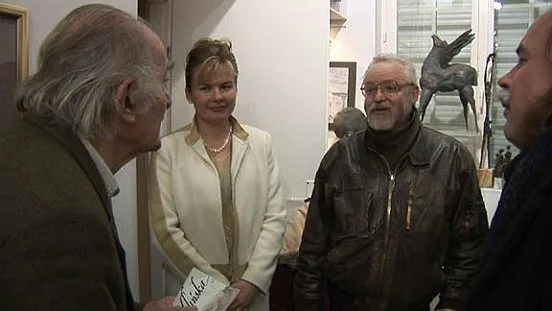
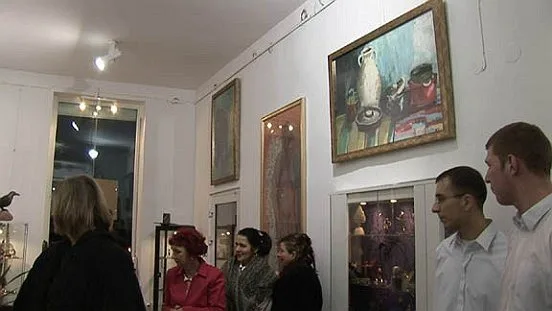
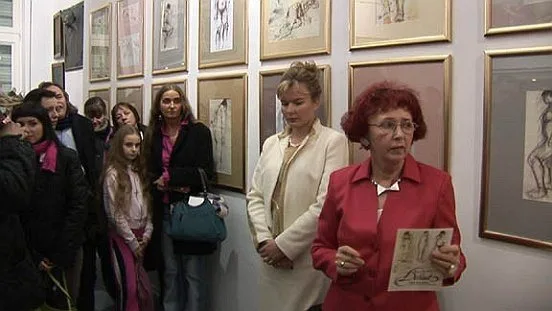
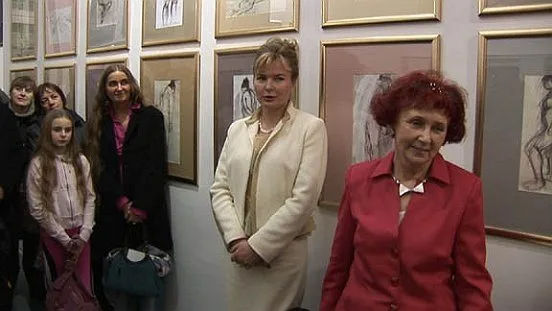
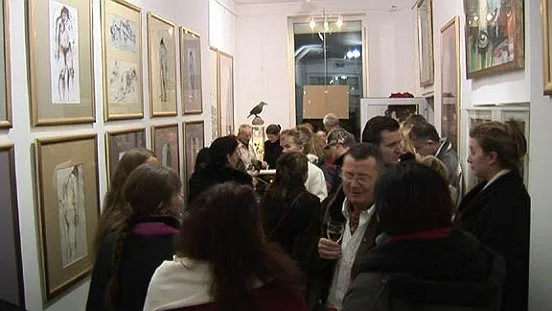
Exhibition photos